Best Bonsai Pots: How to Choose and Where to Buy
Our stance
Drainage holes, wire holes, and the right depth beat any glaze. Develop the tree in a cheap pot and buy the ceramic when the trunk is finished.
Short answer
If your tree is still developing, buy a deep plastic or mica training pot — $10 to $30, and roots run fast in it. If the trunk is where you want it, buy a ceramic pot about two-thirds the tree's height in length, with drainage and wire holes. Glaze is a styling decision, not a horticultural one.
Pot shopping goes wrong in a predictable way: people buy the beautiful ceramic first, plant a thin young tree in it, and then wonder why the trunk never thickens. A show pot is designed to restrain a tree. That's its job.
So the first question isn't what the pot looks like — it's which stage your tree is in. Developing trees want depth and room. Finished trees want the shallow ceramic that makes them look like bonsai.
The second question is size, and there's a rule for it: pot length roughly two-thirds the tree's height, depth roughly the trunk's diameter at the base. The pot size calculator further down does that arithmetic against your measurements, including the exceptions for cascade and literati.
Our picks at a glance
| # | Pick | What for | Typical price |
|---|---|---|---|
| 1 | Mica training pot | Development pot | $12–30 |
| 2 | Plastic nursery grow pot | Development pot | $3–12 |
| 3 | Unglazed stoneware rectangle | Show pot — conifers | $25–90 |
| 4 | Glazed oval | Show pot — deciduous and flowering | $25–95 |
| 5 | Cascade pot | Show pot — cascade and semi-cascade | $30–95 |
| 6 | Shallow slab or forest tray | Show pot — group plantings | $25–70 |
Some links here are, or will become, affiliate links. If you buy through one we earn a commission. It doesn't change your price, and it doesn't change our picks — we'd still tell you to skip the seed kits.
Development pot
Mica training pot
$12–30typical
- What it is
- A pressed mica-and-polymer pot in traditional bonsai shapes — looks close to ceramic at arm's length, weighs a fraction, won't crack in a freeze.
- Why we picked it
- The best value in bonsai containers. It survives winters that split ceramic, it costs a fifth as much, and it's deep enough to develop roots while still reading as a bonsai pot on a bench.
- Who it's wrong for
- A show. Up close the surface is obviously not ceramic, and it never develops the patina that makes an old pot worth looking at.
Development pot
Plastic nursery grow pot
$3–12typical
- What it is
- A plain deep nursery container, often with extra holes drilled in the base and sides.
- Why we picked it
- Nothing thickens a trunk faster than an unrestricted root run, and this is the cheapest way to give one. Every grower with a developing tree has a row of these behind the display bench.
- Who it's wrong for
- Anywhere you want the tree to look finished. It's a growing container, and it looks like one.
Show pot — conifers
Unglazed stoneware rectangle
$25–90typical
- What it is
- High-fired clay in browns, greys, and reds, left unglazed so the surface stays matte and takes on colour with age.
- Why we picked it
- The traditional match for junipers and pines, and the tradition has a logic: a quiet pot lets an evergreen that never changes colour carry the whole composition. High-fired stoneware also handles frost far better than terracotta.
- Who it's wrong for
- A flowering or autumn-colour tree, where a glaze can echo the display season. It's also the wrong first purchase for a trunk that still needs thickening.
Show pot — deciduous and flowering
Glazed oval
$25–95typical
- What it is
- A shallow oval or soft rectangle finished in a coloured glaze — cream, celadon, blue — glazed outside, usually bare inside.
- Why we picked it
- The soft outline suits deciduous trees, and glaze gives you a colour conversation with flowers or autumn leaves. On a Japanese maple or a satsuki azalea it's the difference between a tree in a pot and a composition.
- Who it's wrong for
- A rugged conifer with deadwood, where a glossy glaze fights the tree. Also wrong for a cold bench if the pot isn't rated frost-proof.
Show pot — cascade and semi-cascade
Cascade pot
$30–95typical
- What it is
- A tall, narrow, deep pot — the inverse of the usual bonsai proportion.
- Why we picked it
- A cascade needs height under the tree so the falling branch has somewhere to go, and it needs the weight low so the whole thing doesn't tip. This shape is the only one that does both.
- Who it's wrong for
- Anything upright. In a normal composition the depth swallows the trunk and the tree looks planted in a chimney.
Show pot — group plantings
Shallow slab or forest tray
$25–70typical
- What it is
- A very shallow rectangular tray, sometimes a flat slab with no lip, used for forest and root-over-rock plantings.
- Why we picked it
- Depth is what makes a group planting read as landscape instead of a row of pots. Under an inch of soil forces the trees to look like they're growing out of ground, not out of a container.
- Who it's wrong for
- A single tree, and for anyone who can't water daily in summer — an inch of substrate in July dries out fast.
What to avoid
Any pot without drainage holes
A pot without holes is a vase, and a tree in a vase drowns. If you've fallen for one anyway, drill it — a diamond bit under a trickle of water goes through ceramic in about a minute.
Pots with no wire holes
Tie-down wire is what holds a freshly repotted tree still while new roots grip. A tree that rocks in its pot breaks the fine roots it's trying to grow, and drainage holes alone make an awkward substitute.
Buying a big pot for the tree to grow into
An oversized pot holds water the current root mass can't drink, so the soil stays wet for days. It's the opposite of generous. Pot up one size at a time and let the two-thirds rule set the ceiling.
Thin terracotta on a freezing bench
Low-fired terracotta is porous. Water soaks into the wall, freezes, and splits the pot — usually in February, usually taking the root ball's protection with it. Ask whether a pot is high-fired before it goes outside for a winter.
The glued gravel crust on a gift pot
The decorative pebble layer on cheap gift bonsai is bonded with adhesive, and it sheds water off the surface instead of letting it soak in. The tree looks watered while the root ball stays dry. Take it off.
How we choose
Pot choice splits into two questions, and we treat them separately. The horticultural half — drainage, depth, wire holes, frost resistance — has right answers, and this page states them plainly. The aesthetic half is a matter of taste inside a tradition, so we describe the convention and why it exists rather than declaring a winner.
We haven't fired, frozen, or stress-tested these pots. What we can tell you is what material a pot is, how that material behaves in a freeze, and what proportions the tradition uses — all checkable, none of it invented.
Sizing comes from the two-thirds convention, applied by the calculator on this page against your actual measurements, with the documented exceptions for cascade, literati, and group plantings.
Size the pot to your tree
Tree height and trunk caliper in, pot length, width, and depth out — with the shape exceptions for cascade and literati.
enter height and trunk caliper — the pot dimensions appear here
Species on this page
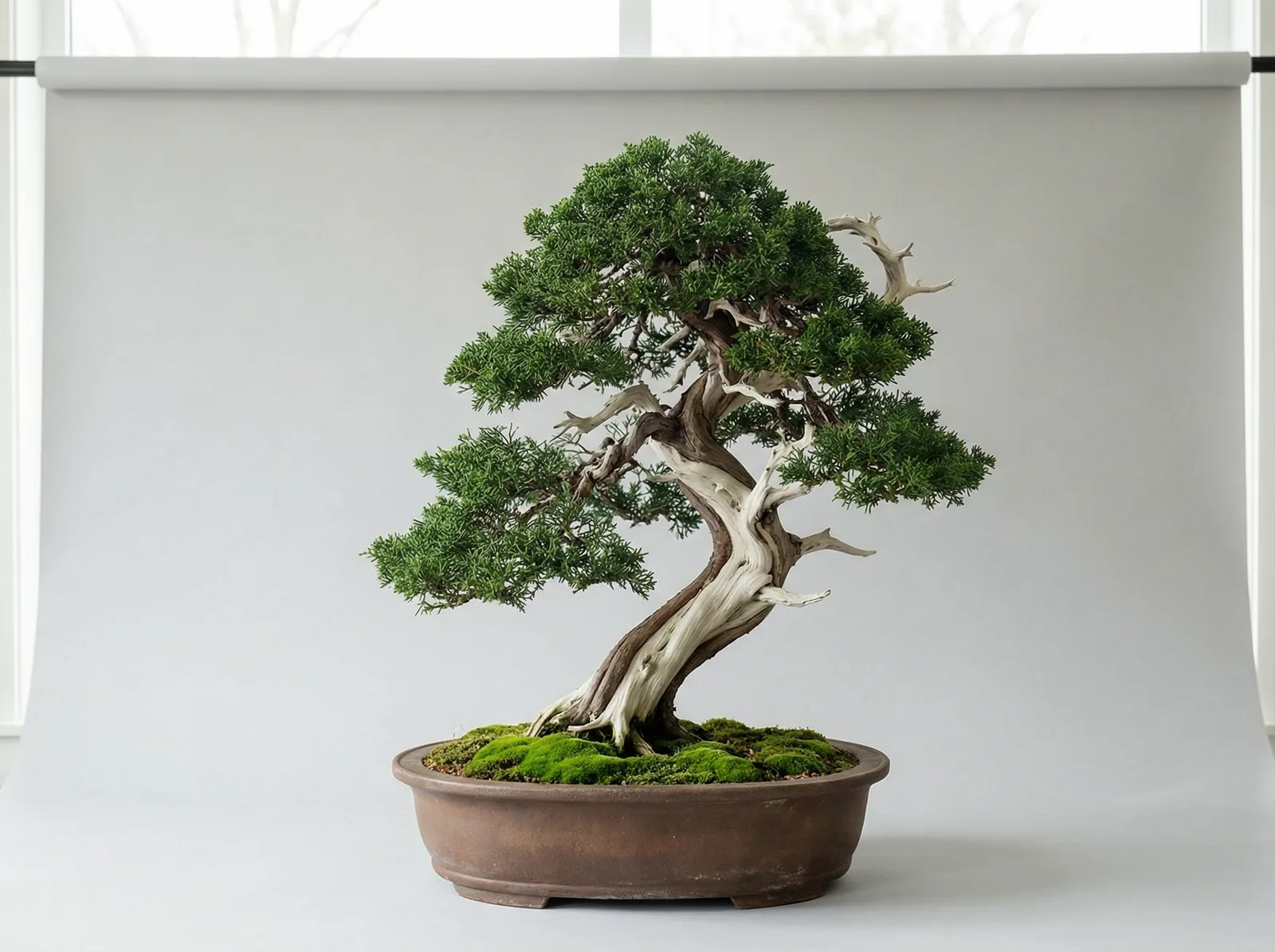
Juniper Bonsai
- care
- beginner
- light
- full sun
- zone
- 4–9
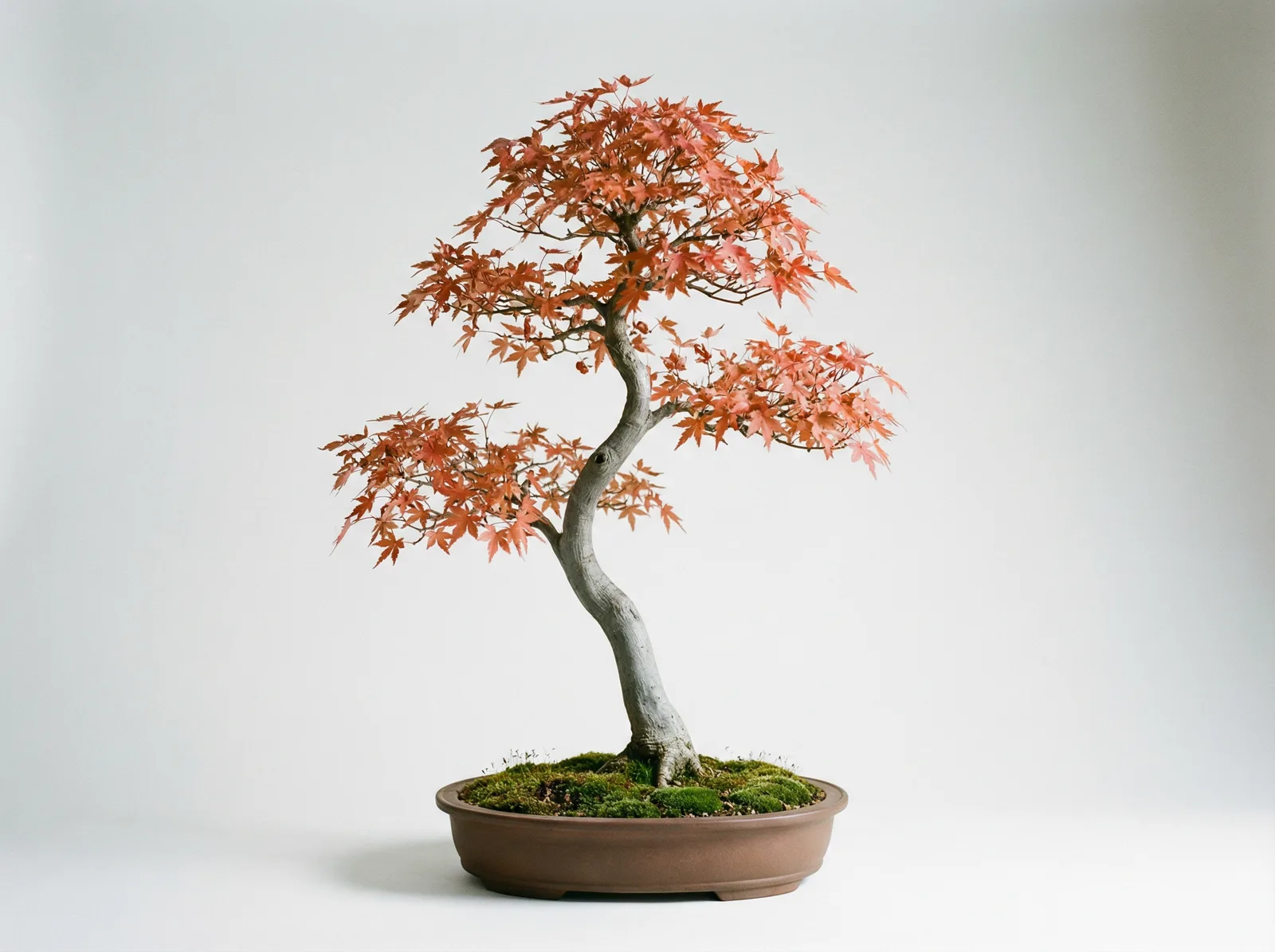
Japanese Maple Bonsai
- care
- intermediate
- light
- partial shade
- zone
- 5–9
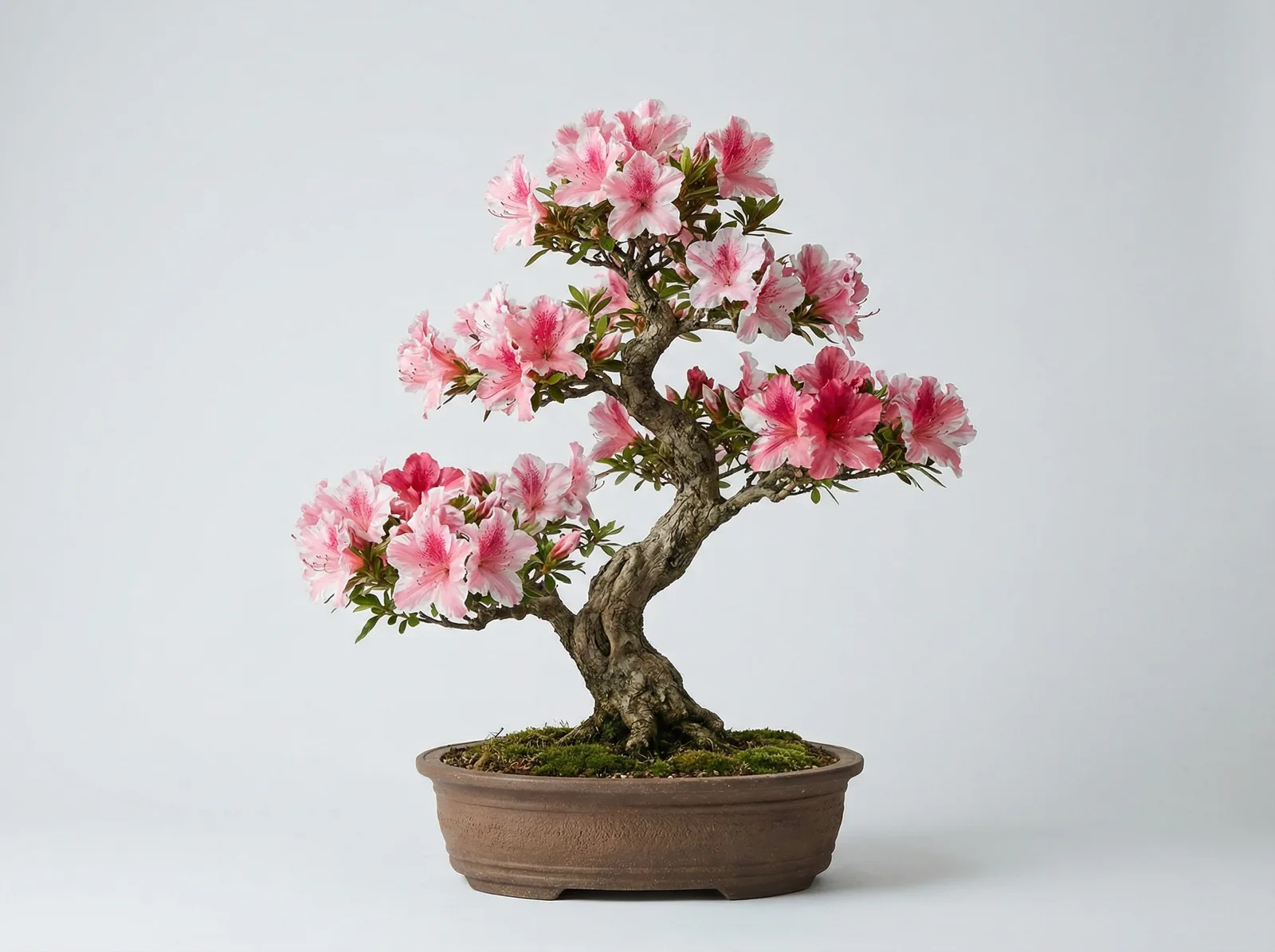
Satsuki Azalea Bonsai
- care
- advanced
- light
- partial shade
- zone
- 7–9
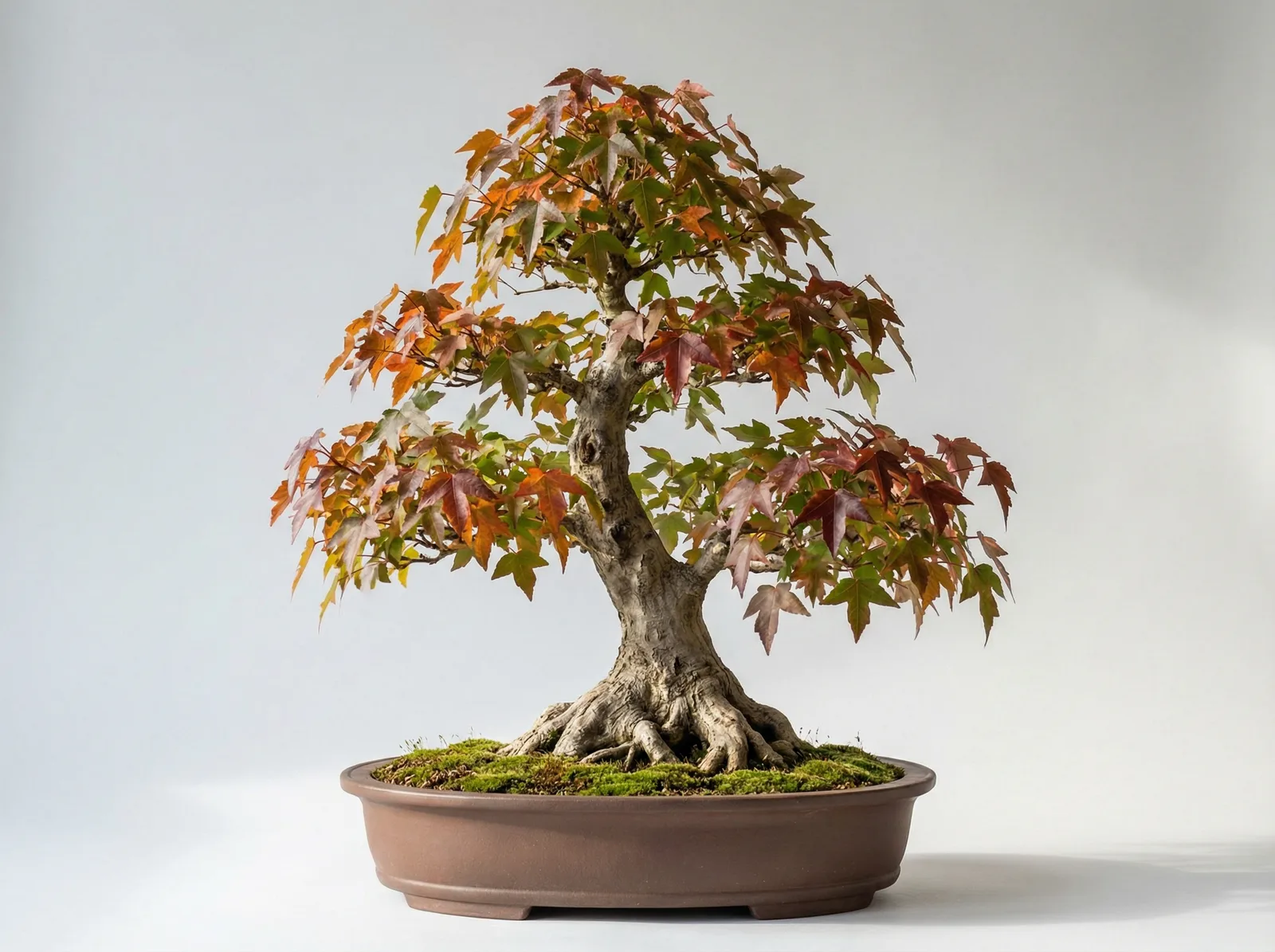
Trident Maple Bonsai
- care
- intermediate
- light
- full sun+
- zone
- 5–9